

The short answer. Good safe installation in Portland starts before the safe arrives. Pick a safe rated for the threat you care about, fire or theft or both. Put it on the strongest floor you have, out of sight. Then bolt it down with anchors made for that floor. A safe that is not bolted can be tipped, rolled out on a dolly, and opened somewhere quiet. If your safe is locked, jammed, or the code is gone, a safe tech can almost always open it and get it working again.
The Quick Version
- Fire and theft are two ratings. A fire safe keeps papers cool. A burglary safe slows down tools. Many safes do one well and the other poorly.
- Bolting matters more than weight. Even a heavy safe can be moved by two people with a dolly. Bolts stop that.
- The floor sets the method. Concrete takes wedge anchors. Wood takes lag bolts into the joists.
- Gun owners have extra rules. Oregon law asks you to secure guns you are not carrying.
- Most lockouts are fixable. Dead batteries, a drifted dial, and a lost code all have a known fix.
- Repair is often cheaper than replace. The exception is a fire safe that has already been through a fire.
Safe Installation in Portland Starts With One Question
What are you protecting, and from what? That one question decides almost every other choice. People skip it and buy the safe that looks the toughest in the store. Then they find out later it was built for the wrong job.
Think about the three things that can happen to what is inside.
- Fire. Birth records, passports, deeds, and family photos. Paper chars at about 451 degrees Fahrenheit, per Wikipedia's safe article. The furnace in a one hour fire test runs near 1,700 degrees, which tells you how fast a real house fire gets past that point.
- Theft. Cash, jewelry, coins, watches, and guns. A thief wants to be in and out in a few minutes.
- Water. Firefighters use a lot of it. Portland also has a long wet season, and basements and garages can flood.
Most homes need fire protection plus a basic level of theft protection. Gun owners need theft resistance and quick access. Shops and offices often need both a fire and a burglary rating. Our safes page walks through each type by what it is built for.
Fire Ratings vs Burglary Ratings
This is where most buyers get lost. The labels look alike, but they test very different things.
Fire Ratings
A fire rating tells you how long the inside stays cool enough for paper. The common test standard is UL 72, now in its seventeenth edition, dated January 27, 2026. UL says Class 350 units are meant to protect paper records. A label like "Class 350, 1 hour" means the inside stayed under 350 degrees Fahrenheit for one hour in the test, per Wikipedia's safe article. That is about 100 degrees below the point where paper chars.
One hour and two hour Class 350 ratings are the common ones, and Wikipedia's safe article puts the test heat at about 1,700 degrees for the one hour test and 1,850 degrees for the two hour test. For most homes, one hour is a sensible floor. A home fire often burns for a while before crews can reach the room where your safe sits.
Paper is not the only thing you might store. Hard drives, USB sticks, and old film fail at much lower heat than paper does. UL 72 has two lower classes for this. Class 150 covers paper plus tapes and photos. Class 125 adds computer media. If you want to protect digital media, look for one of those ratings, or use a small media box inside the safe.
Burglary Ratings
A burglary rating tells you how long the safe held up against a trained person with tools. These are the ones you will see most.
- RSC. Short for Residential Security Container, covered by UL 1037. Wikipedia's safe article says Level I must hold off one tech with hand tools for 5 minutes, and Level II must hold off two techs with harder tools for 10 minutes. Most gun safes carry an RSC label. It is a real step up from a lockbox, but it is the entry level.
- TL-15. A tool resistant safe under UL 687. It must resist hand, picking, mechanical and electric tools for 15 minutes, per Wikipedia's safe article. This is a true high security safe and it is heavy.
- TL-30. The same tools, held for 30 minutes. This is what jewelers and cash businesses look at.
- TRTL. Adds a cutting torch to the attack. Wikipedia's safe article lists TRTL-30x6 at 30 minutes and TRTL-60x6 at 60 minutes, on all six sides of the safe.
You may also see "B rate" or "C rate." Those describe how thick the steel is. They are not a test. They are still useful for comparing two commercial safes side by side.
Why One Safe Rarely Does Both Well
A fire safe is mostly insulation between two thin steel skins. That filler keeps heat out, but a pry bar can get through the thin outer steel fast. A burglary safe is mostly thick steel, and steel carries heat right to the inside. Safes that do both well exist. They are heavier and cost more. If you only need one kind of protection, buy for that and do not pay for the other.
Pick the Right Size and Type
Buy bigger than you think you need. Almost everyone fills a safe faster than they planned. A gun safe fills even faster, because the rack count on the box assumes guns with no scopes packed tight together.
Here is how the common types line up with real needs.
- Fire safes for papers, records, and small keepsakes. Light theft protection.
- Gun safes for long guns and handguns, usually RSC rated, often with some fire rating too.
- Jewelry safes with TL-15 or TL-30 ratings and soft lined drawers.
- Floor safes set into concrete. Hard to find and very hard to attack.
- Wall safes between the studs. Easy to hide, but thin and low on fire rating.
- Depository safes with a drop slot, for stores and restaurants that make cash drops during a shift.
Dial, Keypad, or Fingerprint
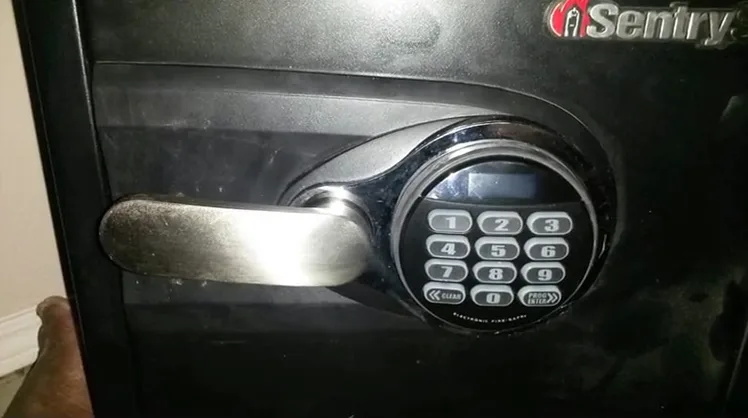
A mechanical dial has no batteries and can last for decades. It is slower to open. A keypad opens in seconds, which matters for a gun safe. It needs fresh batteries, and the keypad itself can wear out. A fingerprint reader is the fastest, but it can struggle with wet, cold, or dirty hands. Many people are happy with a keypad that has a backup key or a way to power it from the outside.
Choose the Spot Before the Safe Shows Up
A good spot is out of sight, on a strong floor, and away from where water collects. Try to meet as many of these as you can.
- Hide it. A closet, a basement corner, or a spare room beats a garage that anyone can see into when the door is open.
- Back it into a corner. Two walls make it hard to get a pry bar behind or beside the door.
- Stay on the ground floor or basement when you can. The floor is stronger, and heat rises in a fire.
- Watch for water. Keep it off low spots and away from water heaters and washers.
- Leave room for the door. Measure the full swing of the door so it opens all the way.
- Measure the path in. Check every doorway, turn, and stair on the way to the spot.
Portland's damp months matter here. Fire safes hold moisture inside their walls. A small dehumidifier rod or a few desiccant packs inside will keep papers and metal from getting musty or rusty.
Bolting a Safe Down in Portland Homes
This is the step people skip, and it is the one that stops the most thefts. An unbolted safe, even a heavy one, can be tipped onto a dolly and wheeled out. Once it is gone, the thief has all the time in the world. Bolting also keeps a tall gun safe from tipping over on someone, which is worth thinking about in an earthquake region like ours.
Most safes have pre drilled holes in the floor of the safe for this. The right hardware depends on what is under your feet.
Concrete Slab Floors
Garages, basements, and many newer homes sit on concrete. This is the best floor for a safe. The usual method is concrete wedge anchors set into holes drilled with a hammer drill. Use every hole the maker gives you. On a smooth, level slab, the safe sits flat and the bolts pull it down tight.
Check two things before anyone drills. Some newer slabs are post tensioned, which means steel cables run through the concrete under high tension. Drilling into one is dangerous and costly. Look for a stamp or warning sign near the garage or entry. Also check for radiant floor heat tubes, which can sit just under the surface.
Wood Floors Over Joists
Many older Portland homes have wood floors over a basement or crawl space. Plywood alone will not hold a safe. The bolts need to reach the joists under the floor. The usual method is heavy lag bolts driven into the joists, sometimes with a steel plate or wood blocking added below. Go down into the basement first and find where the joists run. Then place the safe so its bolt holes line up with them.
Upper Floors
A big gun safe full of guns is one of the heaviest things in a house, and that load sits on a small patch of floor. If the safe has to go upstairs, place it close to an outside wall or a bearing wall and run it across the joists, not along them. If you are unsure your floor can take it, ask a contractor to check before the safe goes up.
Carpet and Tile
Carpet and pad let a safe rock, even after it is bolted. The best fix is to cut a clean square out of the carpet under the safe so it sits on the subfloor or slab. Tile can crack when a bolt is drawn tight. A tech will drill it with a bit made for tile and shim where needed.
Gun Safes in Oregon
Oregon law asks gun owners to secure any firearm that is not carried by them or under their control. Under ORS 166.395, that means an engaged trigger or cable lock, a locked container, or a gun room. A gun safe is the simplest way to meet it for more than one gun.
Two details catch people. A gun does not count as secured if the key or combination is easy for someone you have not allowed to use it. And a handgun left alone in a car where people outside can see it does not count either. The same statute makes a miss a Class C violation, a Class A violation if a minor gets the gun, and each gun counts on its own. Laws change, so check the current text if you have questions.
A few tips for gun safes in particular.
- Plan for quick access. A small keypad or fingerprint safe near the bed for a handgun, and a larger safe elsewhere for long guns, is a common setup.
- Bolt it down. Gun safes are the top target in a burglary, and a tall safe is easy to tip.
- Control the moisture. Portland air is damp for much of the year. Use a dehumidifier rod and check your guns for rust.
- Keep the combination private. Change the code if a housemate, contractor, or ex ever learned it.
Moving a Heavy Safe Into Place
Most safe injuries happen on the move, not in daily use. Stairs, tight turns, and old porches are where things go wrong. A heavy safe on a normal hand truck can get away from you in a second.
We carry the rigging and dollies to move safes up to 600 pounds within the Portland metro, through doors, up stairs, and onto trucks. For larger safes, we coordinate with a specialty mover. Moving it and bolting it on the same visit is usually the easiest plan.
Lockouts and Lost Combinations
A safe that will not open feels like an emergency, and sometimes it is. The good news is that most lockouts have a known cause. Here are the common ones and what to try first.
Dead or Weak Batteries
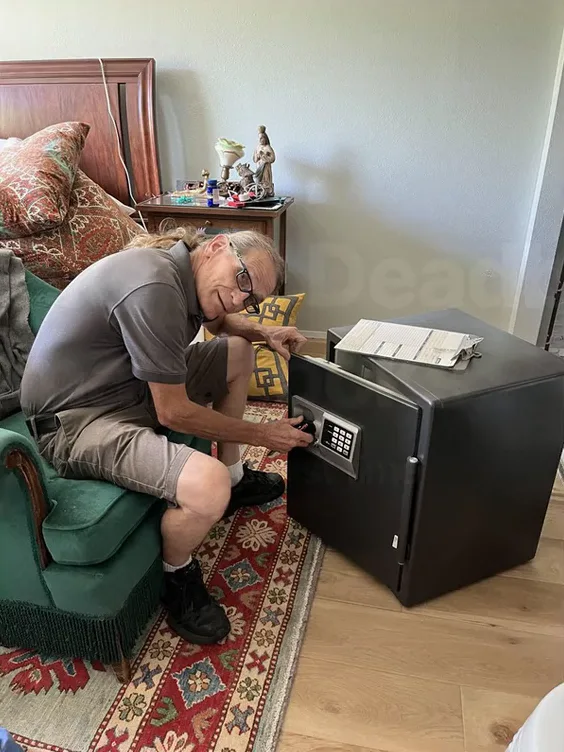
This is the most common keypad problem by far. The keypad may beep, flash, or do nothing at all. Many keypads let you power them from the outside, often with a 9 volt battery held to two contacts under the keypad. Others have a backup key hidden behind a small cover. Check your manual before calling. If new batteries do not help, the keypad or its wiring may have failed.
Wrong Code Lockout
Most keypads lock you out for a few minutes after several wrong tries. Wait out the full timer, then enter the code slowly. Pressing more buttons during the timer can restart it.
A Dial That Will Not Open
Mechanical dials need to be turned in an exact way. Turn the dial left four times to the first number, right three times to the second, left twice to the third, then right until it stops. Some safes use a different pattern, so check your manual. Go slow and land right on each number. Dials can also drift out of spec as they wear. If a known combination only works on some tries, the lock needs service soon, before it quits for good.
Lost Combination
If the code is truly gone, you have two paths. For some brands, the maker keeps a record of the factory combination and will release it with proof of ownership and the serial number. That can be the cheaper first call, and we will tell you when it is. The other path is a safe tech. We work on personal, commercial, and fire rated safes, and our goal is always to open them without damage so the safe keeps working afterward. When we cannot avoid drilling, we explain why first, and the safe is still repairable in most cases.
Bolt Work That Is Stuck
Sometimes the code is right and the handle still will not turn. Often something inside the safe is pressing on the door, or the bolts are binding. Push firmly on the door toward the hinge side while you turn the handle. If that does not free it, stop there. Forcing a handle can break parts that are harder to fix.
Safe Repair in Portland: Repair or Replace?
A lot of safes that seem finished just need a part. Our safe repair and cracking service in Portland covers lock mechanisms, dials, handles, and bolt work. We carry the largest in-stock selection of safe parts on multiple brands in the area, so most repairs happen the same day.
Usually Worth Repairing
- A keypad that has quit or gives errors
- A dial that is hard to turn or only works sometimes
- A loose or broken handle
- Bolts that stick or drag
- A wish to swap a dial for a keypad, or the other way around
- A good safe that was opened by drilling and needs a proper repair
Usually Time to Replace
- A fire safe that went through a fire. The insulation does its job once. After that, it will not protect as well.
- A thin, low cost safe with a major failure. The repair can cost more than the safe is worth.
- Heavy rust or water damage inside the lock or door.
- A safe that no longer fits the job, like a small fire box now holding cash or guns.
If you are not sure, call and describe the safe, the brand, and what it is doing. We can often tell you on the phone which way it is likely to go.
Brands We Know
We work on and source parts for AMSEC, Hollon, Liberty, Gardall, SentrySafe, Chubb, and Protex. If yours is not on that list, call anyway. We have probably seen it.
Signs Your Safe Needs Service Soon
Most safes give warnings before they fail. Catching them early is cheaper than a lockout.
- The keypad beeps a low battery warning or is slow to respond
- You have to enter the code twice to get it to open
- The dial feels gritty, loose, or harder to turn
- The handle takes extra force
- The door rubs or has to be lifted to close
- The safe rocks or shifts when you lean on it
How a Safe Call With Us Goes
ABC Lock and Safe has worked on safes from our Northeast Portland shop since 1993. When you call, a real dispatcher answers, 24 hours a day. Tell us the brand, the type of lock, and what is going on. You get a phone estimate before anyone is sent out. A background checked technician arrives, typically in 15 to 30 minutes for urgent calls in Portland. We pick before we drill, and we leave the safe working when we can.
We cover Portland and the cities around it. See our Portland locksmith page for the neighborhoods we serve, or read our locksmith FAQ for more common questions.
Ready to install, move, open, or repair a safe? Call (503) 766-5541.
Sources
- UL Standards and Engagement, UL 72 Tests for Fire Resistance of Record Protection Equipment, seventeenth edition, January 27, 2026, read October 18, 2026
- UL Standards and Engagement, UL 687 Burglary Resistant Safes, read October 18, 2026
- UL Standards and Engagement, UL 1037 Antitheft Alarms and Devices, read October 18, 2026
- Wikipedia, Safe, read October 18, 2026
- Oregon Revised Statutes 166.395, Securing Firearms, read October 18, 2026