
Pick ABC Lock and Safe as a preferred source on Google
Every lock picking video sells the same myth. Two bobby pins and ten seconds, and any door swings open. Real front door locks do not work that way. Even a lock pick maker's own beginner guide says the easiest start is a rake pick with a tension tool, and the easiest locks to learn on are simple padlocks with few pins. We open locks all over Portland, and the easiest thing to pick a lock with comes down to which lock you are facing. A bathroom privacy knob opens with any thin, straight item in the small outside hole. A bare spring latch can sometimes be slipped with a plastic card. A front door pin tumbler lock takes a rake and a tension tool, and a deadbolt will not give to a card at all.
What Matters
- Privacy knobs are the easy one. The outside hole is made to be opened with a thin tool.
- Spring latches can be slipped. The angled latch on a plain knob can sometimes be pushed back with a card. A deadbolt cannot.
- Pin tumbler locks need two tools. One holds turning pressure, the other moves the pins. A rake is the easiest pick to learn.
- Bobby pins look easy in videos. On a real front door lock, most first timers give up, and some snap metal off in the keyway.
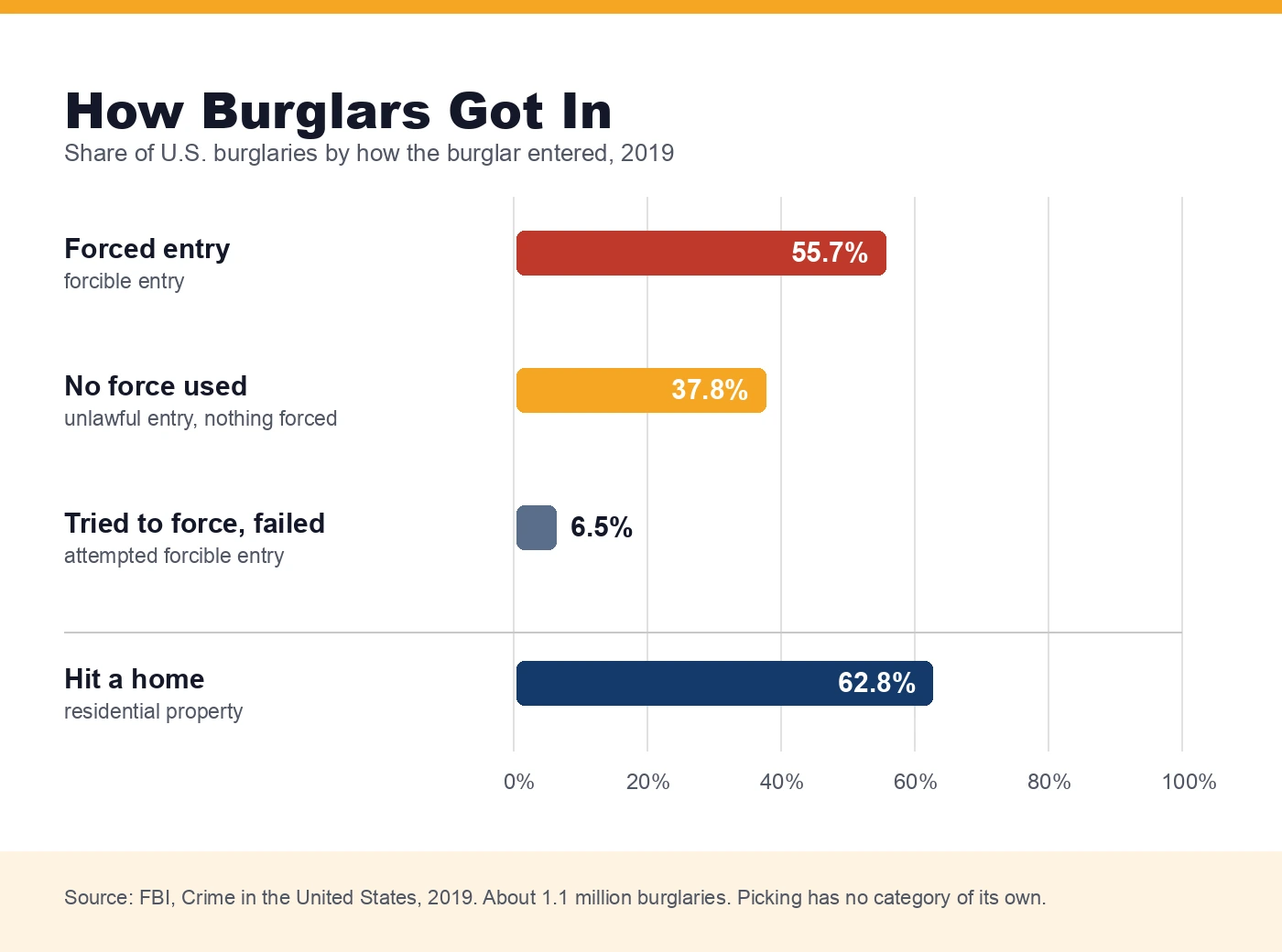
- Burglars rarely pick. The FBI found 55.7 percent of 2019 burglaries used force, and 37.8 percent used no force at all.
- Oregon law cares about intent. Holding a tool made for forced entry with plans to use it is a Class A misdemeanor.
Six Locks and the Easiest Thing That Opens Each
Look at the lock before you look for a tool. Each one has a different easy answer.
| Lock on the door | Easiest thing that opens it | How hard for a beginner |
|---|---|---|
| Bathroom or bedroom privacy knob | A thin straight item in the outside hole, or the pin key it came with | Easy. It is built to open this way |
| Spring latch knob with no deadbolt | A stiff plastic card slid along the latch | Hit or miss. Useless on a deadbolt |
| Cheap padlock | A rake pick and tension tool | Fair. Fewer pins to set |
| Front door knob or deadbolt cylinder | A rake pick and tension tool, then a hook if the rake fails | Hard. Most first tries fail |
| Security pin or high security cylinder | Pro tools and a lot of practice | Very hard. Some are tested to resist picking |
| Keypad or smart lock | Nothing in a junk drawer. Fix the battery or code first | Not a picking job |
The Privacy Knob Is the Easiest Lock in Your House
The push button knob on a bathroom or bedroom is not built to keep anyone out. It is built for privacy. That is why the outside knob has a small hole. Push a thin, straight item into that hole and you hit a release that pops the button.
Schlage's J40 and F40 bed and bath knobs ship with a small privacy key for this, and any straight, narrow item will also do, according to a Hunker guide to Schlage bathroom handles. The same guide says not to turn the knob while you press. You will hear a click when it lets go.
So if a toddler locked the bathroom, the easiest thing is a straightened paper clip or a tiny screwdriver. No picking needed.
A Card Works on Some Latches, Never on a Deadbolt
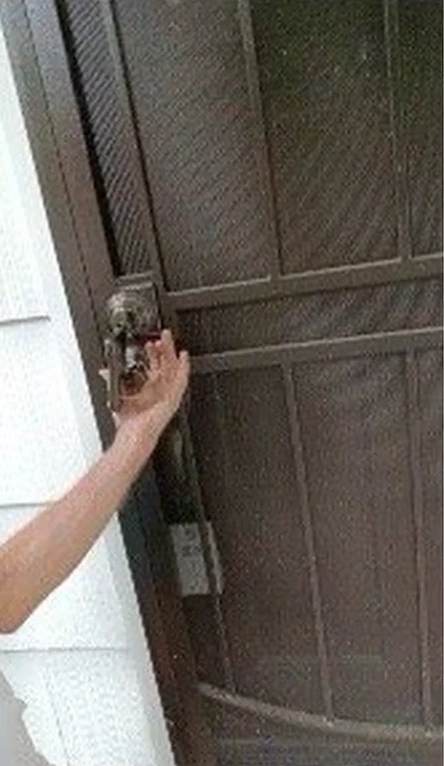
A plain knob uses a spring latch with an angled face. The angle lets the door close by itself. It is also why a card can sometimes push the latch back from the door edge. The wikiHow household items guide covers this, and warns you not to use a real bank card because it can get wrecked.
What that guide leaves soft is the big catch. A deadbolt has no angle at all. It is a square bolt thrown into the frame, and a card does nothing to it. If your front door locks with a deadbolt, the card idea is dead before it starts.
For a Real Pin Tumbler Lock, a Rake Is the Easiest Pick
Your front door lock is almost surely a pin tumbler. Inside it is a row of small spring loaded pins. The right key lifts each one to the right height so the core can turn. Picking means doing that without the key.
It always takes two tools. One is a tension tool that holds light turning pressure on the core. The other moves the pins. Grim Workshop calls raking the easier starting method because it leans on luck more than skill. A hook, which sets one pin at a time, takes much more feel.
So with real tools, the easiest pick is a rake. With no real tools, people reach for bobby pins, one bent into a tension tool and one used as the pick. That is the method the wikiHow guide teaches for pin tumbler locks.
Why Bobby Pins and Paper Clips Let You Down
Bobby pins fail far more often than the videos let on. Five reasons.
- The metal is too soft. It bends instead of lifting the pins, so you never feel anything set.
- Tension is the real skill. Too much pressure binds every pin. Too little drops them. It takes a lot of practice to learn that feel.
- Front door locks are tighter. Videos often use clear practice locks or cheap padlocks, not a real deadbolt on a real door.
- Security pins fight back. Many locks have shaped pins built to fool a pick. Kwikset, for one, sells its SmartKey line as pick resistant and bump proof.
- Things snap off inside. A broken pin tip or a snapped key in the keyway turns a lockout into a lock repair.
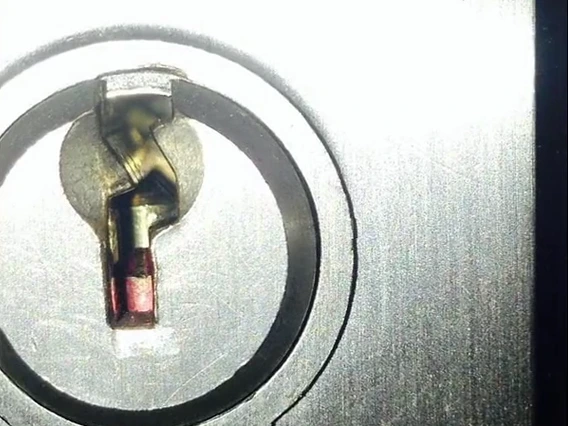
The photo at the top of this page shows that last one. A piece of metal broke off deep in a cylinder. Nothing will turn until it comes out. Pulling it takes the right extractor and a steady hand, not another bobby pin.
What Burglars Actually Use
If you worry about your own door, take heart. Picking is slow and hard, and that is why most burglars skip it.
The FBI counted about 1.1 million burglaries in 2019. Of those, 55.7 percent involved forcible entry, 37.8 percent were unlawful entries with no force, and 6.5 percent were tries at forced entry that failed, per the FBI burglary report for 2019. Homes and other residences were 62.8 percent of all burglaries. The FBI does not even track picking as its own type of entry.
Up the road, the Seattle Police crime prevention bulletin says the most common way to force a door with a wood jamb is to kick it open. The weak spot is almost always the strike plate, which is often held only by thin trim. It also says burglars have been using pry tools on doors more and more.
So the lock that gets picked in a video is rarely the lock that fails in real life. The door frame fails, or the door was never locked.
How to Make Your Door Harder to Open
None of this costs much, and most of it beats a fancy lock on a weak frame.
- Lock it every time. That 37.8 percent no force share is a reminder that the easiest way in is an unlocked door.
- Put a deadbolt on every outside door. Seattle Police say that includes the door from the garage into the house, and the bolt throw should be at least 1 inch.
- Use 3 to 4 inch screws. Swap the short strike plate screws for long ones that reach the stud, per the Seattle bulletin. Put at least one long screw in each hinge too.
- Add a heavy strike plate or latch guard. The bulletin points to a four screw strike plate, and a latch guard to block pry bars.
- Pick a cylinder with security pins. Ask for pick and bump resistant cylinders when you rekey or replace.
- Go high security for a business. Cylinders listed to UL 437 add hardened parts on top of pick resistant designs, per Locksmith Ledger. See commercial locks and high security cylinders for business doors.
Is It Legal to Own Lock Picks in Oregon?
Oregon has no law that bans simply owning lock picks. What it has is a burglary tool law, and that law turns on intent. Under ORS 164.235, it is a crime to possess a tool adapted or designed for forced entry while you plan to use it that way, or while you know someone else plans to. It is a Class A misdemeanor.
So a hobby set in a drawer and a pick set in a stranger's pocket at 3 a.m. are two very different things under the law. Pick only locks you own, or locks you have clear permission to open. Rules differ from state to state, so if you live outside Oregon, read your own state's law. This is general information, not legal advice.
Doing locksmith work for pay is a separate question. Oregon requires a state certificate for that, covered in the post on whether Ace Hardware will rekey a lock.
When to Stop and Call a Locksmith
Give the privacy knob a try. Give a bare spring latch a try if you are sure it is your door. Past that, stop and call.
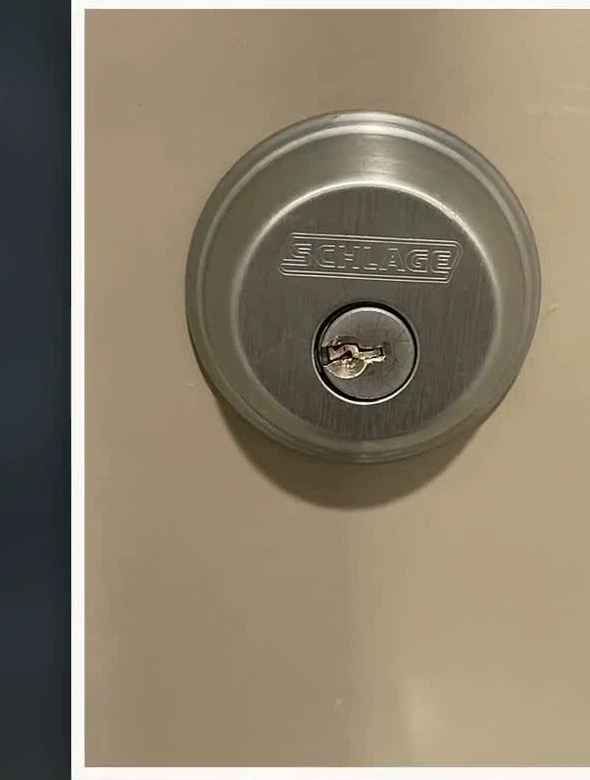
- It is a deadbolt. No card, pin or clip trick from a video is going to open it fast.
- Something broke off inside. More poking pushes it deeper.
- The key turns but nothing moves. That is a broken part, not a picking problem.
- Someone inside needs you. A child, a pet, a stove left on. Do not spend 40 minutes on YouTube.
- You are tempted to drill. Drilling wrecks the lock, so now you are buying a new one.
The Easiest Tool Is the Right One for That Lock
For a privacy knob, the easiest thing is a paper clip. For a front door, it is a trained hand with real tools. And if you asked because you want a safer home, the lock is rarely the weak spot. The door frame and the unlocked door are.
ABC Lock and Safe has worked on Portland locks since 1993, and we pick or rake the lock open in the large majority of lockouts. We drill only when picking is not an option, and we tell you why first. We are licensed, bonded and insured, open 24 hours, and typically reach you in 15 to 30 minutes. You get the price on the phone before we send anyone. See our residential locksmith services or the locksmith FAQ.
Locked out right now? Call (503) 766-5541.
Pages Cited
FBI, Crime in the United States 2019, Burglary, October 2026
Seattle Police Crime Prevention Bulletin, Door Security, October 2026
ORS 164.235, Possession of a Burglary Tool or Theft Device, October 2026
wikiHow, How to Pick a Lock With Household Items, October 2026
Grim Workshop, How to Pick a Lock, October 2026
Hunker, How to Unlock a Schlage Bathroom Handle, October 2026
Kwikset, SmartKey Security, October 2026
Locksmith Ledger, Key Control and High Security Lock Mechanisms, October 2026